
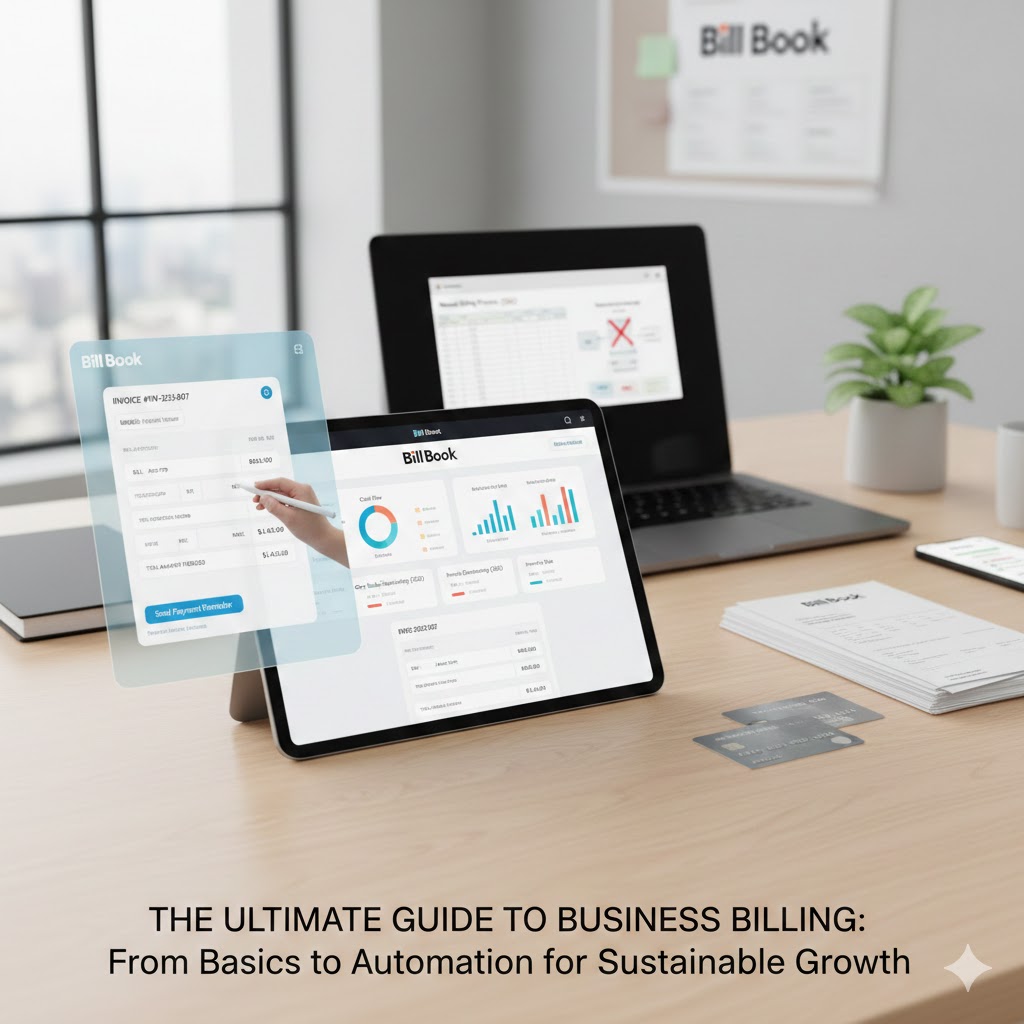
Introduction: Billing – The Undisputed Lifeblood of Your Business
Imagine a business as a living thing. If sales are the oxygen, then billing is the circulatory system, efficiently pumping the lifeblood – cash flow – throughout its every vein and artery. Far too often, billing is relegated to a mundane administrative task, an afterthought handled with grudging reluctance. This is a critical misconception. In reality, a robust and efficient billing process is not merely about getting paid; it is the bedrock of professional reputation, the engine of healthy cash flow, the guardian of legal compliance, and a silent, yet powerful, determinant of your business’s ability to thrive, innovate, and scale.
Did You Know? Research consistently shows a direct correlation between efficient billing and business success. Businesses with optimized billing processes report higher customer satisfaction, reduced operational costs, and significantly improved cash flow, sometimes cutting Days Sales Outstanding (DSO) by as much as 30-50%.
This comprehensive guide will demystify every facet of business billing, transforming it from a chore into a strategic advantage. Whether you’re a budding entrepreneur just issuing your first invoice or a seasoned business owner looking to optimize your financial operations, this guide is your definitive roadmap.
1. The Anatomy of a Professional Bill (Invoice): More Than Just a Demand for Payment
At its core, a bill (or invoice) is a formal request for payment for goods sold or services rendered. However, a truly professional and legally sound invoice is a detailed document that serves multiple critical functions: it’s a legal record, a communication tool, and a crucial component for financial tracking and tax purposes.
A. Essential Components of Every Invoice:
- Header (Your Business Identity):
- Your Business Legal Name & Logo: Establishes professionalism and brand recognition.
- Contact Information: Full address, phone number, email, and website.
- Legal Identifiers: Your Tax Identification Number (e.g., GSTIN in India, VAT ID in Europe, EIN in the US) – crucial for tax compliance.
- Invoice Title: Clearly states “INVOICE.”
- Client Information (The Recipient):
- Client’s Legal Name: Or company name.
- Client’s Full Address: For mailing and legal records.
- Client’s Contact Details: Phone number, email (optional but helpful).
- Client’s Tax ID: (If applicable for B2B transactions, e.g., GSTIN for B2B in India).
- Unique Identifiers & Dates:
- Unique Invoice Number: Crucial for tracking and referencing. It should be sequential (e.g., INV-0001, INV-0002).
- Invoice Date: The date the invoice was generated.
- Due Date: The date by which payment is expected.
- Purchase Order (PO) Number: (If provided by the client) Links the invoice back to their procurement process.
- Line Items (The Details of the Transaction):
- Description of Goods/Services: Be clear, concise, and specific. Vague descriptions can lead to disputes.
- Quantity: Number of units, hours, items, etc.
- Unit Price/Rate: Price per unit, hourly rate, or fixed service fee.
- Line Item Total: Quantity x Unit Price.
- Financial Summary:
- Subtotal: Total of all line items before taxes or discounts.
- Discounts: Any agreed-upon reductions, clearly stated (e.g., “10% Early Payment Discount”).
- Applicable Taxes: Break down taxes (e.g., GST, VAT, Sales Tax) clearly, showing the rate and the amount. This is critical for tax compliance.
- Shipping/Handling Charges: If applicable.
- Total Amount Due: The final amount the client needs to pay.
- Payment Instructions & Terms:
- Accepted Payment Methods: Bank transfer details (Account Name, Number, IFSC/SWIFT Code), UPI ID, credit card payment links, cheque payable instructions.
- Payment Terms: Clearly state the terms (e.g., “Net 30,” “Due on receipt,” “Payment within 7 days”).
- Late Payment Policy: What happens if the payment is overdue? (e.g., “A late fee of X% per month will be applied to overdue balances”).
- Thank You Note/Personal Message: A touch of professionalism that fosters good client relations.
B. Why Each Component Matters:
- Legal Compliance: In many jurisdictions, specific information (like tax IDs, invoice numbers, detailed descriptions) is legally required for an invoice to be considered valid for tax deductions or legal disputes.
- Clarity & Transparency: A well-structured invoice minimizes confusion, reducing the chances of payment delays or disputes.
- Cash Flow Management: Clear due dates and payment terms are essential for forecasting and managing your incoming funds.
- Record-Keeping: Invoices are critical documents for accounting, auditing, and financial analysis. They provide an undeniable paper trail of every transaction.
2. Common Types of Billing Methods: Choosing the Right Approach for Your Business
Not all businesses bill the same way. The nature of your products, services, industry, and client relationships will dictate the most appropriate billing method. Understanding these types is crucial for optimizing your revenue collection.
A. Transactional / Standard Billing:
- Description: The most common form, where a single invoice is issued for a specific sale of goods or completion of a service.
- Use Cases: Retail purchases, one-off consulting projects, individual product sales.
- Example: A graphic designer completes a logo design project and sends one invoice for the total agreed-upon fee.
B. Recurring / Subscription Billing:
- Description: Automated, periodic billing for services or products delivered continuously over time (e.g., monthly, quarterly, annually).
- Use Cases: SaaS (Software as a Service) companies, gyms, membership organizations, content subscriptions, retainer-based services.
- Key Advantage: Predictable revenue, lower administrative effort once set up.
- Example: A customer pays $29/month for access to a cloud-based project management tool.
C. Progress Billing:
- Description: Billing for large, long-term projects in installments as specific portions of the work are completed. It’s tied to the progress made on the project.
- Use Cases: Construction, large software development projects, custom manufacturing.
- Key Advantage: Helps maintain cash flow on projects spanning months or years, reduces financial risk for both parties.
- Example: A construction company bills 25% after foundation work, 25% after framing, 25% after roofing, and the final 25% upon completion.
D. Milestone Billing:
- Description: Similar to progress billing but tied to the achievement of pre-defined project milestones rather than a percentage of completion.
- Use Cases: Consulting, web development, event planning, any project with clear, measurable deliverables.
- Key Advantage: Provides clear benchmarks for both parties and can incentivize timely delivery.
- Example: A marketing agency bills 30% after strategy approval, 40% after campaign launch, and 30% after final reporting.
E. Time and Materials (T&M) Billing:
- Description: Billing based on the actual time spent by personnel and the cost of materials used for a project. Often used when the scope of work is not fully defined upfront.
- Use Cases: IT support, repair services, custom development, legal services.
- Key Advantage: Flexibility when project scope can change, ensures fair compensation for work actually performed.
- Example: A freelance developer charges an hourly rate for coding, plus the cost of any third-party software licenses required.
F. Fixed-Price Billing:
- Description: An agreed-upon, lump-sum price for an entire project or service, regardless of the actual time or materials expended.
- Use Cases: Clearly defined projects where scope is stable (e.g., logo design, specific reports).
- Key Advantage: Predictability for the client, simplicity in invoicing. Higher risk for the service provider if scope creeps.
- Example: A web designer charges a fixed fee of $2,000 for a 5-page website.
G. Cost-Plus Billing:
- Description: The client pays for all direct costs of a project (materials, labor) plus an agreed-upon percentage or fixed fee for profit and overhead.
- Use Cases: Government contracts, large construction projects where cost overruns are common but transparent.
- Key Advantage: Fair for the contractor as it covers all costs, but requires meticulous record-keeping.
- Example: A contractor bills for actual labor and material costs, plus a 15% markup.
3. Understanding Billing Cycles and Payment Terms: The Language of Cash Flow
“Net 30,” “Due on receipt,” “Proforma invoice” – these terms can be confusing but are fundamental to managing your cash flow. Clear communication of payment terms is as important as the service itself.
A. Key Payment Terms Explained:
- Due on Receipt: Payment is expected immediately upon delivery of the invoice. Often used for small transactions or new clients.
- Net X (e.g., Net 7, Net 15, Net 30, Net 60): Payment is due X calendar days from the invoice date.
- Net 7: Payment due within 7 days. Common for established, trusted clients or smaller amounts.
- Net 30: The industry standard; payment due within 30 days.
- Net 60: Less common, usually for large corporations or specific industries with long payment cycles.
- EOM (End of Month): Payment is due by the end of the month in which the invoice was issued.
- 1%/10 Net 30: A discount (1%) is offered if the invoice is paid within 10 days; otherwise, the full amount is due in 30 days. This incentivizes early payment.
B. Billing Cycle Frequency:
- One-time: For transactional billing (e.g., product sale).
- Weekly: Common for hourly contractors or project-based work with quick turnaround.
- Bi-weekly / Fortnightly: Another option for hourly work, providing more manageable accounting intervals.
- Monthly: The most prevalent for recurring services (SaaS, retainers), utilities, and general operational expenses.
- Quarterly / Annually: Often used for larger subscription plans, long-term service agreements, or insurance premiums. Offering annual payments often comes with a discount to encourage upfront payment.
C. Advance vs. Arrears Billing:
- Advance Billing (Pre-payment): The client is billed before the goods or services are delivered.
- Advantages: Guarantees cash flow, reduces collection risk, common for subscriptions (e.g., pay for next month’s service).
- Disadvantages: Requires client trust, can be a barrier for new customers.
- Arrears Billing (Post-payment): The client is billed after the goods or services have been delivered.
- Advantages: Common practice, builds trust, clients pay after seeing value.
- Disadvantages: Higher risk of late or non-payment, impacts cash flow until payment is received.
D. The Importance of Clarity:
Ambiguous payment terms are a primary cause of late payments. Always clearly state your terms on every invoice, in your contracts, and during initial client discussions. Consistency builds professionalism.
4. Digital vs. Paper Billing: The Irreversible Shift to Digital Invoicing
The days of printing, folding, stuffing, and stamping invoices are rapidly fading. Digital billing, is not just a trend; it’s the modern standard, offering unparalleled efficiency, cost savings, and environmental benefits.
A. Advantages of Digital Billing:
- Speed & Instant Delivery:
- Paper: Invoices can take days to reach the client via postal mail.
- Digital: Delivered instantly via email, SMS, or dedicated billing portals. This dramatically reduces the “float” time.
- Cost Efficiency:
- Paper: Costs associated with printing, paper, envelopes, stamps, and labor for manual processing.
- Digital: Eliminates these material costs entirely.
- Stat: A study by the Global Business Travel Association (GBTA) found that processing a paper invoice can cost between $12 and $30, while an e-invoice can cost as little as $3.50.
- Enhanced Organization & Accessibility:
- Paper: Prone to being lost, misplaced, or damaged. Requires physical storage space.
- Digital: Stored securely in cloud-based systems, easily searchable, accessible from anywhere, anytime, on any device.
- Reduced Errors:
- Paper: Manual data entry increases the risk of human error (typos, miscalculations).
- Digital: Automated invoice generation from templates, calculation, and data transfer significantly reduces errors.
- Improved Cash Flow: Faster delivery and easier payment options (e.g., integrated payment links) lead to quicker payments.
- Stat: Businesses using e-invoicing can reduce their Days Sales Outstanding (DSO) by up to 20-30%.
- Environmental Friendliness: Going paperless contributes to sustainability efforts.
- Audit Trail & Compliance: Digital systems automatically create a robust audit trail, simplifying tax compliance and financial reviews. Invoices are often timestamped and securely stored.
- Integration Capabilities: Digital billing platforms integrate with accounting software, CRM systems, and payment gateways, streamlining the entire financial ecosystem.
B. The Transition to Digital Billing:
While some clients, particularly older businesses, might still prefer paper, it’s crucial to encourage the shift. Modern billing software like “myBillBook” provides the tools to manage both, but emphasizes the digital workflow
5. The Billing Workflow: A Step-by-Step Journey from Service to Payment
An optimized billing workflow is a well-oiled machine that minimizes friction and maximizes payment efficiency. Here’s a breakdown of the typical stages:
- Quote / Estimate Generation:
- Purpose: Initial proposal to the client outlining expected costs for goods or services. Not a bill, but a preliminary agreement.
- Best Practice: Be detailed and transparent. Get client sign-off on the quote before starting work.
- Your Tool’s Role: myBillBook can help generate professional quotes that seamlessly convert into invoices.
- Order Fulfillment / Service Delivery:
- Purpose: This is where you deliver the value you promised.
- Best Practice: Maintain clear records of deliverables, project progress, and any scope changes.
- Invoice Generation:
- Purpose: Creating the formal request for payment.
- Best Practice: Generate invoices promptly after service completion or according to your billing cycle. Delaying invoices often delays payments.
- Your Tool’s Role: myBillBook automates this, pulling data from quotes, tracking time, or recurring schedules.
- Invoice Delivery:
- Purpose: Getting the invoice to the client efficiently.
- Best Practice: Email is standard, but consider secure portals, SMS, or even WhatsApp for immediate delivery and confirmation.
- Your Tool’s Role: Multi-channel delivery options for maximum reach.
- Payment Processing:
- Purpose: Collecting the funds owed.
- Best Practice: Offer multiple, convenient payment options (bank transfer, credit/debit cards, UPI, digital wallets).
- Your Tool’s Role: Integration with various payment gateways for seamless collection.
- Payment Reconciliation & Record Keeping:
- Purpose: Marking invoices as paid and updating your financial records.
- Best Practice: Reconcile payments daily or weekly to ensure accurate financial statements.
- Your Tool’s Role: Automated reconciliation helps match incoming payments to outstanding invoices, updating statuses in real-time.
- Stat: Businesses that automate payment reconciliation save an average of 15-20 hours per month on manual data entry.
- Follow-up & Collections (If Necessary):
- Purpose: Gently reminding clients about overdue payments.
- Best Practice: Implement a polite but firm follow-up strategy with automated reminders.
- Your Tool’s Role: Scheduled, customizable payment reminders.
6. Common Billing Challenges (And How to Transform Them into Opportunities)
Even the most meticulous businesses face billing hurdles. Recognizing these challenges and proactively addressing them can significantly improve your financial health.
A. Late Payments:
- The Problem: The most common and frustrating challenge, directly impacting cash flow.
- Stat: Over 60% of small businesses report late payments as a significant problem, often causing cash flow gaps that affect payroll, inventory, and growth.
- Solutions:
- Clear Payment Terms: Reiterate “Net 30” (or other terms) in quotes, contracts, and invoices.
- Early Payment Incentives: Offer a small discount (e.g., 1% off if paid in 10 days).
- Automated Reminders: Gentle, professional reminders sent a few days before and after the due date.
- Multiple Payment Options: Make it as easy as possible to pay.
- Deposits/Upfront Payments: Especially for new clients or large projects.
- Your Tool’s Role: Automated reminders, easy payment links.
B. Invoice Disputes & Errors:
- The Problem: Discrepancies in services, charges, or calculations leading to payment delays.
- Solutions:
- Detailed Line Items: Ensure descriptions are unambiguous.
- Client Sign-off: Get written approval on quotes and project scope.
- Proof of Delivery: For goods, track delivery. For services, keep logs of hours/tasks.
- Pre-Invoice Review: Share a “draft invoice” for client approval before sending the final one.
- Your Tool’s Role: Accurate calculations, professional templates, clear descriptions.
C. Maintaining Accurate Records:
- The Problem: Manual data entry, disparate systems, and disorganization lead to errors, lost invoices, and compliance issues.
- Solutions:
- Centralized Billing System: Use a dedicated platform to manage all invoices.
- Automated Data Entry: Link sales/project data directly to invoice generation.
- Regular Reconciliation: Periodically match invoices with payments and bank statements.
- Your Tool’s Role: Centralized dashboard, automated reconciliation features.
D. Security & Data Privacy:
- The Problem: Handling sensitive client financial data requires robust security measures to prevent breaches and maintain trust.
- Solutions:
- PCI DSS Compliance: Ensure any system handling credit card data meets these standards.
- Data Encryption: Protect sensitive data at rest and in transit.
- Access Control: Limit who can access financial information within your team.
- Secure Payment Gateways: Use reputable, encrypted payment processors.
- Your Tool’s Role: Built-in security features, compliance with industry standards.
E. Scalability Issues:
- The Problem: As your business grows, manual billing processes become unsustainable, leading to bottlenecks and errors.
- Solutions:
- Automation: Implement software for recurring billing, invoice generation, and reminders.
- Integration: Connect billing with accounting, CRM, and inventory systems.
- Your Tool’s Role: Designed for growth, handling increasing volumes of invoices effortlessly.
7. Key Performance Indicators (KPIs) for Billing: Measuring Your Financial Health
You can’t improve what you don’t measure. Tracking key billing KPIs provides invaluable insights into your financial efficiency and helps identify areas for optimization.
A. Collection Effectiveness Index (CEI):
- What it measures: How effectively your business collects on its receivables over a specific period.
- Formula:
CEI = [(Beginning Receivables + Monthly Credit Sales - Ending Receivables) / (Beginning Receivables + Monthly Credit Sales - Ending Unearned Revenue)] x 100(A simpler version focuses on collected vs. collectible). - Why it matters: A higher CEI indicates stronger collection practices and better cash flow.
B. Days Sales Outstanding (DSO):
- What it measures: The average number of days it takes for your company to collect payment after a sale has been made.
- Formula:
DSO = (Accounts Receivable / Total Credit Sales) x Number of Days in Period - Why it matters: A lower DSO means you’re collecting money faster, improving cash flow. An increasing DSO is a red flag.
- Benchmark: Industry averages vary, but generally, a DSO under 30-45 days is considered healthy.
C. Average Age of Accounts Receivable (AAR):
- What it measures: Similar to DSO, but it looks at the age of outstanding invoices, often broken down by aging buckets (e.g., 0-30 days, 31-60 days, 61-90 days, 90+ days).
- Why it matters: Helps identify problematic accounts and prioritize collection efforts. Older receivables are harder to collect.
D. Invoice Error Rate:
- What it measures: The percentage of invoices that contain errors requiring correction or reissuance.
- Why it matters: A high error rate leads to delays, disputes, client frustration, and increased administrative costs.
- Goal: Aim for an error rate as close to 0% as possible.
E. Cost of Invoice Processing:
- What it measures: The total cost (labor, materials, software, etc.) associated with generating, sending, and processing each invoice.
- Why it matters: Helps justify investment in automation. Manual processing is significantly more expensive.
- Stat: Companies that automate invoice processing can reduce the cost per invoice by up to 80%.
F. Recurring Revenue Growth Rate:
- What it measures: The percentage increase in your recurring revenue over a period.
- Why it matters: Crucial for subscription-based businesses, indicating sustainable growth.
8. Choosing the Right Billing Tool: Your Partner in Financial Efficiency
The days of managing invoices with Excel spreadsheets or physical ledgers are long gone for any serious business. Modern billing software is no longer a luxury but a necessity for efficiency, accuracy, and scalability. When evaluating solutions, consider these critical factors:
- Ease of Use & Intuitive Interface: Can you create a professional invoice in under 60 seconds? Is the dashboard clear and easy to navigate?
- Automation Capabilities:
- Recurring Billing: For subscriptions and retainers.
- Automated Reminders: For pre- and post-due date follow-ups.
- Automatic Reconciliation: Matching payments to invoices.
- Integration with Other Systems:
- Accounting Software: (e.g., Tally, QuickBooks, Xero).
- Payment Gateways: (e.g., Stripe, PayPal, Razorpay, UPI).
- CRM (Customer Relationship Management) Tools: For a holistic view of client interactions.
- Inventory Management: For product-based businesses.
- Customization & Professionalism:
- Branding: Can you add your logo, colors, and customize invoice templates?
- Fields: Can you add custom fields for specific industry needs?
- Reporting & Analytics:
- Dashboards: Real-time overview of outstanding payments, cash flow.
- Financial Reports: Generate reports for tax, profit/loss, and AR aging.
- Mobile Accessibility: Can you create, send, and manage invoices on the go from your smartphone or tablet?
- Security & Compliance:
- Data Encryption: Protecting sensitive client data.
- Tax Compliance: Support for local tax regulations (GST, VAT, Sales Tax).
- Cloud Security: Reliability and uptime.
- Customer Support & Resources:
- Availability: Is help readily available when you need it?
- Knowledge Base: Tutorials and guides.
- Pricing & Scalability:
- Cost-Effectiveness: Does it fit your budget as you grow?
- Tiered Plans: Can it scale from a solo entrepreneur to a growing enterprise?
Conclusion: Future-Proofing Your Business – From Billing to Financial Empowerment
Billing is more than just a step in your business process; it’s a strategic lever that, when pulled correctly, can propel your business forward. Neglecting your billing operations can lead to crippling cash flow issues, strained client relationships, and stunted growth.
By embracing the principles outlined in this guide – from understanding the nuances of different billing methods and payment terms to leveraging the power of digital tools and automation – you transform a potential bottleneck into a powerful engine of efficiency and profitability.
Investing in a smart, user-friendly billing solution like myBillBook isn’t just about streamlining invoicing; it’s about gaining control over your finances, freeing up valuable time, fostering stronger client relationships, and ultimately, future-proofing your business for sustainable success. Stop merely billing, and start strategically managing your revenue. The future of your business depends on it.
