
Creating GST bills for gold and silver jewellery needs more care than regular retail billing. A jewellery billing software does not only show the selling price. It should clearly mention the metal type, purity, weight, rate, making charges, GST breakup, discount, payment details, and other jewellery-specific details, such as HUID or hallmark information, wherever applicable.
For a jewellery shop owner, a proper GST bill helps avoid billing confusion, clarifies customer communication, and keeps records ready for accounting and GST filing. This guide explains how to create GST bills for gold and silver jewellery in a simple, practical way.
Summary
To create a GST bill for gold and silver jewellery, add your business details, customer details, invoice number, invoice date, item description, HSN code, purity, gross weight, net weight, rate per gram, making charges, discount, taxable value, GST breakup, and final payable amount. If you sell hallmarked jewellery, also mention HUID or hallmark details where relevant. Use a proper GST billing system to avoid manual calculation errors, especially when the bill includes metal value, making charges, wastage, stones, exchange value, discounts, or advance payments.
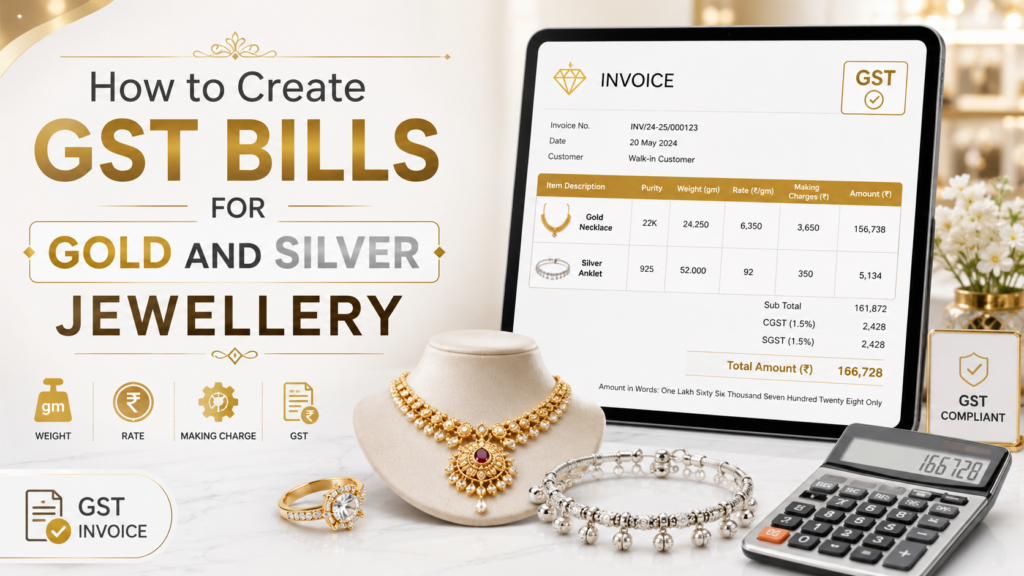
Table of Contents
- Why Jewellery GST Bills Need Extra Attention
- Details to Include in a Gold or Silver Jewellery GST Bill
- GST Rates to Check Before Creating Jewellery Bills
- How to Calculate a GST Bill for Gold Jewellery
- How to Create a GST Bill for Silver Jewellery
- How to Show Making Charges in Jewellery Bills
- How to Handle Old Jewellery Exchange in Billing
- Common Mistakes to Avoid in Jewellery GST Bills
- Practical GST Bill Format for Jewellery Shops
- Conclusion
Why Jewellery GST Bills Need Extra Attention
Jewellery billing is different from normal product billing because the final price depends on many small details.
A gold ring, for example, may include:
- Gold value based on net weight
- Purity such as 22K, 18K, or 14K
- Rate per gram
- Making charges
- Stone or diamond value, if any
- Wastage or other charges, if applicable
- Discount
- GST on taxable value
- Exchange adjustment, if old jewellery is accepted
If even one detail is missed, the customer may not understand how the final amount was calculated. It can also create issues while matching sales records, GST reports, and customer ledgers.
A clear jewellery GST bill should answer three simple questions:
- What exactly did the customer buy?
- How was the final amount calculated?
- What tax was charged and on which value?
Details to Include in a Gold or Silver Jewellery GST Bill
A GST bill for jewellery should include regular invoice details along with jewellery-specific details.
Business Details
Add your jewellery shop name, address, contact number, GSTIN, state, and invoice series. If you have multiple branches or counters, use a consistent invoice numbering system for each location or billing counter.
Customer Details
For B2C sales, customer name and mobile number may be enough for regular billing. For B2B sales or high-value transactions, add the customer’s GSTIN, billing address, state, and place of supply.
Invoice Details
Mention the invoice number, invoice date, payment mode, and sales type. If the customer has paid an advance earlier, mention the adjustment clearly.
Jewellery Item Details
This is the most important part of the bill. Add:
- Product name such as gold chain, silver anklet, gold ring, silver coin, or gold bangle
- Metal type: gold or silver
- Purity: 22K916, 18K750, 14K585, 925 silver, etc.
- HSN code, where applicable
- Gross weight
- Stone weight, if any
- Net metal weight
- Rate per gram
- Making charges
- Discount
- Taxable value
- GST amount
- Final amount
Hallmark or HUID Details
For hallmarked gold jewellery, mention the HUID or hallmark reference where your billing process supports it. This gives customers a better record of what they purchased and helps avoid confusion later during exchange, resale, or service requests.
GST Rates to Check Before Creating Jewellery Bills
Before creating jewellery bills, jewellers should check the latest applicable GST rate for the metal value and making charges. In regular jewellery billing, gold and silver jewellery are commonly mapped under HSN 7113. Making charges are often shown separately, especially when the jeweller wants to give the customer a clear breakup.
A simple way to think about the bill is:
- Metal value: gold or silver value based on weight and rate
- Making charges: labour or making cost charged by the jeweller
- Other charges: stones, diamonds, wastage, certification, packing, or other applicable charges, if any
- GST: applied as per the applicable GST rules
Because GST rules and interpretations can change, jewellery shop owners should confirm the latest rate and billing treatment with their CA or tax advisor before changing invoice settings.
How to Calculate a GST Bill for Gold Jewellery
Let us take a simple example of a gold chain.
Example:
- Item: 22K gold chain
- Net gold weight: 10 grams
- Gold rate: ₹6,000 per gram
- Gold value: ₹60,000
- Making charges: ₹5,000
- Discount: ₹1,000
Step 1: Calculate the Metal Value
Gold value = Net weight × Rate per gram
10 grams × ₹6,000 = ₹60,000
Step 2: Add Making Charges
Gold value + Making charges = ₹60,000 + ₹5,000 = ₹65,000
Step 3: Subtract Discount
₹65,000 – ₹1,000 = ₹64,000
Step 4: Apply GST
Apply GST based on the taxable value and applicable tax treatment. For an intra-state sale, GST is usually split into CGST and SGST. For an inter-state sale, IGST is shown.
Step 5: Show Final Amount Clearly
Your final bill should show the item value, making charges, discount, GST breakup, and total payable amount separately. This helps the customer understand the bill without asking your staff to explain every calculation.
How to Create a GST Bill for Silver Jewellery
Silver jewellery billing follows the same structure as gold jewellery billing, but the item description should clearly mention that the product is silver and include purity wherever applicable.
Example:
- Item: Silver anklet
- Purity: 925 silver
- Net weight: 50 grams
- Silver rate: ₹90 per gram
- Silver value: ₹4,500
- Making charges: ₹700
In the bill, mention:
- Silver anklet as the item name
- Purity or fineness
- Net weight
- Rate per gram
- Making charges
- Taxable value
- GST breakup
- Total amount
Silver items such as anklets, toe rings, coins, utensils, idols, and gift articles may be billed differently depending on product type and shop practice. Keep item names specific so your sales reports and stock records stay clean.
How to Show Making Charges in Jewellery Bills
Making charges are one of the most common sources of confusion in jewellery billing. Some shops show making charges as a fixed amount. Some show them as a percentage of metal value. Some include them in the final item price.
For better transparency, it is usually helpful to show making charges separately in the bill.
Example format:
- Gold value: ₹60,000
- Making charges: ₹5,000
- Discount: ₹1,000
- Taxable amount: ₹64,000
- GST: As applicable
- Total payable: Final amount after tax
This format makes the bill easier for customers to understand. It also helps your accountant identify how the sale value was calculated.
How to Handle Old Jewellery Exchange in Billing
Many jewellery shops accept old gold or silver jewellery in exchange for a new purchase. This needs careful billing because the customer’s old jewellery value should not be mixed casually with the new jewellery sale value.
A practical way to handle this is:
- Create the sale bill for the new jewellery with proper item value, making charges, and GST.
- Record the old jewellery received with weight, purity, rate, and exchange value.
- Adjust the exchange value against the final payable amount.
- Show the balance amount paid by cash, UPI, card, or other mode.
Example:
- New jewellery bill total: ₹80,000
- Old jewellery exchange value: ₹30,000
- Balance payable by customer: ₹50,000
This keeps the new sale, exchange value, and customer payment clear. It also avoids confusion during future returns, customer disputes, or CA review.
Common Mistakes to Avoid in Jewellery GST Bills
Not Mentioning Purity
A bill that only says “gold chain” is not enough. Mention whether it is 22K, 18K, 14K, or another purity. For silver, mention 925, 999, or the relevant fineness where applicable.
Mixing Gross Weight and Net Weight
Gross weight may include stones, beads, or other material. Net metal weight is what matters for metal value calculation. Mention both if your item has stones or non-metal components.
Not Showing Making Charges Clearly
Customers often compare jewellery shops based on making charges. If the bill does not show making charges clearly, it can create trust issues.
Using the Same Item Name for Everything
Avoid using generic item names like “gold item” or “silver item” for every sale. Use specific names such as gold ring, gold chain, silver anklet, silver coin, or silver diya. This improves reports and stock tracking.
Forgetting HSN or GST Breakup
If you are GST-registered, the invoice should show the right GST details. For intra-state sales, show CGST and SGST. For inter-state sales, show IGST.
Not Recording Customer Payments Properly
Jewellery purchases may involve advance payments, part payments, exchange value, UPI, card, cash, or credit. Record the payment mode correctly so your cash counter and bank entries match later.
Practical GST Bill Format for Jewellery Shops
Here is a simple structure you can follow while creating a GST bill for gold or silver jewellery:
| Field | What to Add |
|---|---|
| Invoice number | Unique bill number |
| Invoice date | Date of sale |
| Seller details | Shop name, address, GSTIN, contact |
| Customer details | Name, mobile number, GSTIN if required |
| Item name | Gold ring, silver anklet, gold chain, etc. |
| Metal and purity | Gold 22K916, Silver 925, etc. |
| Weight | Gross weight, stone weight, net weight |
| Rate | Rate per gram |
| Making charges | Fixed amount or percentage |
| Discount | Item-wise or bill-level discount |
| HSN | Applicable HSN code |
| GST breakup | CGST/SGST or IGST |
| Payment details | Cash, UPI, card, advance, exchange, credit |
| Total amount | Final payable amount |
Conclusion
Creating GST bills for gold and silver jewellery is not just about adding GST to the final price. A good jewellery bill should clearly show the metal value, purity, weight, making charges, discount, GST breakup, payment details, and customer information.
For jewellery shops, clean billing builds customer trust and also makes accounting easier. Instead of depending on manual calculations, jewellers can use myBillBook to create GST invoices, track payments, manage customer records, and keep business reports organised.
