
In business transactions, clarity before the deal is just as important as the deal itself. That’s where a proforma invoice comes in.
A proforma invoice is a document shared before a sale is finalised, helping both the buyer and seller align on pricing, quantities, and terms. It is widely used by small businesses, wholesalers, and exporters to avoid confusion and ensure smooth transactions.
Before understanding how it works, let’s first understand what exactly a proforma invoice is.
What is a Proforma Invoice?
A proforma invoice is a preliminary document issued by a seller to a buyer before the actual sale takes place. It outlines the details of the proposed transaction, including products or services, pricing, and terms.
Unlike a regular invoice, it is not legally binding and does not demand payment. Instead, it acts as a confirmation document that helps both parties agree on the terms before proceeding with the order.
In simple terms, it is a “pre-sale invoice” that clearly sets expectations
Why Businesses Use a Proforma Invoice?
Businesses use proforma invoices to ensure there are no misunderstandings before a transaction is finalised.
It helps in clearly communicating:
- Pricing and discounts
- Product details and quantities
- Payment terms
- Delivery expectations
For buyers, it provides clarity and helps in internal approvals. For sellers, it reduces the chances of disputes or last-minute changes.
In B2B transactions, especially, a proforma invoice acts as a professional way to confirm the deal before issuing the final invoice.
When Should You Issue a Proforma Invoice?
A proforma invoice is typically issued before an order is confirmed. Businesses use it in several practical situations.
Common scenarios include:
- When a buyer requests price confirmation before placing an order
- When an advance payment is required
- When businesses need internal approvals (common in B2B)
- During export transactions for customs or documentation
In all these cases, the goal remains the same — to finalise the terms before the actual sale.
What Does a Proforma Invoice Include?
A proforma invoice contains the essential details needed to clearly communicate a proposed transaction.
Typically, it includes:
- Seller and buyer details
- Description of goods or services
- Quantity and pricing
- Applicable taxes and discounts
- Validity period of the offer
- Terms and conditions
How to Create a Proforma Invoice
Creating a proforma invoice involves clearly outlining transaction details before finalising the sale. This ensures both the buyer and seller are aligned on pricing, terms, and expectations.
1. Add Business and Customer Details
Start by entering your business information along with the buyer’s details. This establishes who is involved in the transaction and ensures clear identification.
2. List Products or Services
Include a detailed description of the items or services being offered. Mention quantities and pricing to give the buyer complete visibility of what is being proposed.
3. Include Pricing, Taxes, and Total Amount
Add the total cost, including any applicable taxes, discounts, or additional charges. This helps avoid confusion and ensures transparency in the final amount.
4. Define Validity and Terms
Mention how long the proforma invoice is valid and include key payment or delivery terms. This helps set clear expectations before confirmation.
5. Review and Share with the Buyer
Carefully review all details and share the proforma invoice with the buyer for approval. Once confirmed, it can be converted into a final invoice.
Proforma Invoice vs Invoice
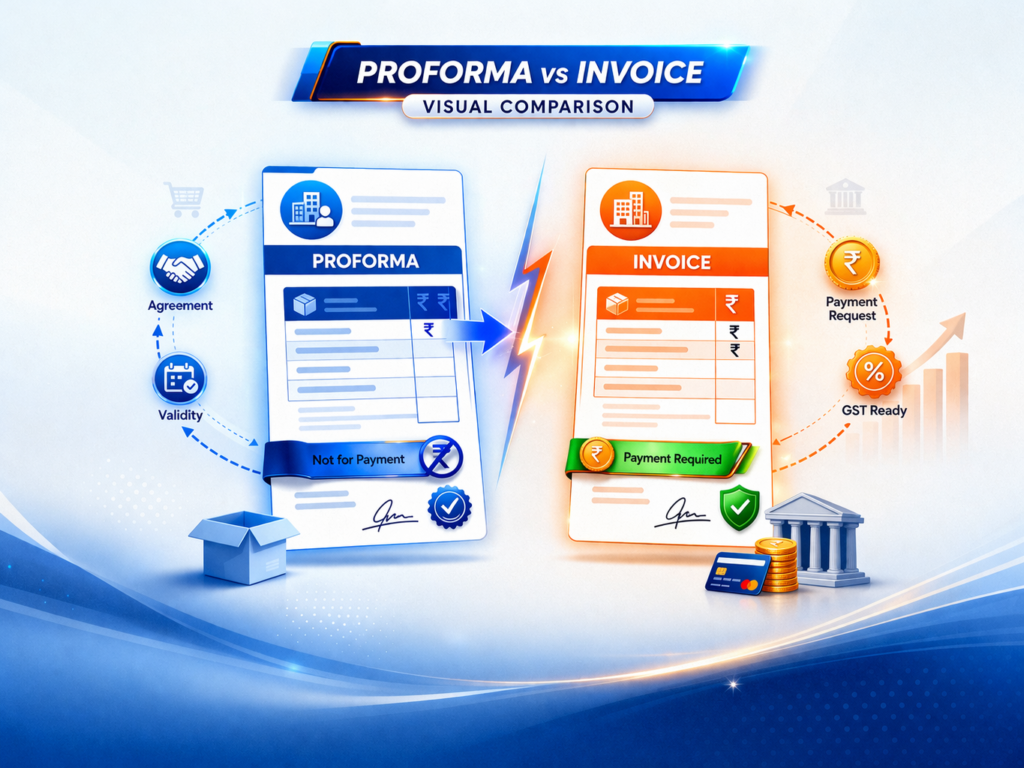
Many businesses confuse a proforma invoice with a regular invoice, but they serve very different purposes.
| Basis | Proforma Invoice | Invoice |
| Purpose | Pre-sale confirmation | Final payment request |
| Timing | Before order confirmation | After the sale is completed |
| Legal Status | Not legally binding | Legally binding |
| Accounting | Not recorded in books | Recorded in accounts |
Proforma Invoice vs Quotation
Creating a proforma invoice is straightforward, but it requires accuracy.
You can create one manually using tools like Word or Excel, or use billing software for faster and error-free generation.
The process generally involves:
- Adding business and customer details
- Listing items or services
- Including pricing, taxes, and terms
- Reviewing and sharing with the buyer
While manual methods work, many businesses prefer using software to save time, maintain consistency, and avoid calculation errors.
Proforma Invoice Format & Templates
A proforma invoice follows a structured format to clearly present all transaction details.
It typically includes seller and buyer information, item details, pricing, taxes, and validity. While the overall structure remains similar, the format may vary based on business type or specific requirements.
If you want to understand the complete structure or refer to a ready Proforma Invoice Format, you can explore a detailed template.
Frequently Asked Questions
A proforma invoice is used to share a detailed estimate of a transaction before the sale is finalised. It helps both buyer and seller agree on pricing, terms, and quantities.
No, a proforma invoice is not legally binding. It is only a preliminary document and cannot be used as proof of sale or for accounting purposes.
No, a proforma invoice cannot be used for GST filing. Only a valid tax invoice is considered for GST and accounting records.
A proforma invoice is issued before a sale to confirm details, while an invoice is issued after the sale to request payment and record the transaction.
Not necessarily. A proforma invoice does not demand payment, but it may be used to request an advance payment under agreed terms.
