
Free Transport Bill Formats
Download a free transport bill format in Word, Excel, or PDF to record freight charges, vehicle number, consignor-consignee details, LR/bilty details, and payment terms.
- Ready formats for recording transport and delivery charges
- Helps maintain proof of goods movement and payment
- Suitable for transporters, logistics firms, and trading businesses
Powered by myBillBook - India's #1 Billing Software


What Is a Transport Bill Format?
A transport bill format is a standard document layout used to record charges and details for transporting goods from one location to another. It helps businesses, transporters, and logistics providers clearly document freight costs, vehicle information, goods description, and delivery terms for every shipment.
A properly structured transport bill format ensures transparency between the sender, transporter, and receiver, supports accurate accounting, and acts as proof of goods movement during audits or payment verification. It is commonly used for local deliveries, inter-city transport, and long-distance freight operations across India.
Download Free Transport Bill Template in Word, Excel & PDF
Choose a free transport bill template in Word, Excel or PDF for recording transporter details, vehicle information, consignor and consignee details, freight charges and payment terms. Select the format that best suits your billing workflow.


What is the Difference Between Transport Bill, Bilty, and LR Copy?
| Document | Main Purpose | Key Details |
|---|---|---|
| Transport Bill | Billing freight/transport charges | Freight, vehicle, parties, charges, payment |
| Bilty / LR Copy | Proof that goods were accepted for transportation | LR number, consignor, consignee, goods, route, vehicle |
| Transport Invoice | Formal invoice for transport services | Billing party, service charges, applicable tax details and payment terms |
How to Create a Transport Bill Format?
If you want to create the bill digitally instead of filling a template manually, use our free invoice generator to create an invoice online.
Want to Invoice Faster and Smarter?
Invoice templates require manual updates and calculations.
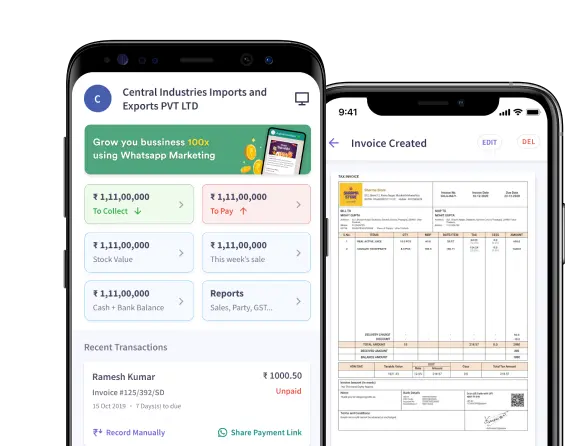
Our free invoicing software lets you create accurate, customised invoices in just a few clicks.
What Is a Transport Invoice Format and What Is It Used For?
A transport invoice format is a structured invoice used by transporters and logistics businesses to bill customers for freight and transportation services. It is issued to formally document and charge for freight or logistics services used to move goods from one place to another. It helps transporters clearly define the service provided, calculate charges based on distance, weight, vehicle type, or trips, and avoid payment disputes.
From a compliance perspective, a transport invoice supports GST reporting, transporter records, and audit requirements. It acts as proof of service, helps track outstanding payments, and creates a transparent record between the transporter and the customer for accounting, reconciliation, and legal reference.

What is the Difference between Transport Invoices and Other Invoices?

Transport Invoice Format
A transport invoice is issued for providing freight or logistics services, not for selling goods. It highlights vehicle and driver details, pickup and delivery locations, distance or weight-based charges, fuel surcharges, and transporter GST rules. It is commonly linked with LR, GR, or e-way bill documentation.
Other Invoice Format
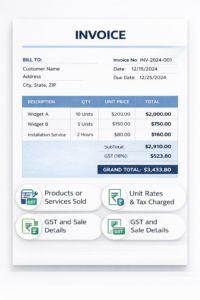
An other invoice is issued for the sale of goods or services and represents a transfer of ownership. It includes product or service descriptions, quantities, unit prices, discounts, GST details, payment terms, and totals. These invoices serve as official records for accounting, taxation, revenue tracking, and customer billing.
What are the Essential Fields that must be Included in a Standard Transport Bill Format?
A standard transport bill format must include specific fields to ensure transparent billing, accurate records, and smooth transportation of goods. These fields help transporters and businesses avoid confusion and maintain proper documentation.
Transport Bill Number and Date
The transport bill number and date serve as unique identifiers, making it easy to track shipments, payments, and transport-related records.
Transporter Details
This field includes the transporter’s business name, address, contact information, and GSTIN if applicable, establishing responsibility for the transport service.
Consignor Details
Consignor details identify the sender of the goods and include their name, address, and tax information when required.
Consignee Details
Consignee information specifies the receiver of the goods, ensuring accurate delivery and clear ownership during transportation.
Goods Description
The goods description covers the type of goods, quantity, weight, and packaging details, helping verify the shipment contents.
Vehicle Information
Vehicle information, such as vehicle number and transport mode, supports tracking and validation of goods movement.
Freight Charges
Freight charges specify the agreed transportation cost and serve as the basis for the transport bill.
Additional Charges
This section lists additional costs, such as loading, unloading, toll fees, or handling charges, if applicable.
Total Payable Amount
The total payable amount shows the final transport charge after adding all applicable costs.
Payment Terms
Payment terms clarify how and when the transport charges are to be paid, reducing payment disputes.
Signature or Stamp
The transporter’s signature or stamp confirms the accuracy and authenticity of the transport bill.
What are the Advantages of Using a Transport Bill Format?
Using a standard transport bill format offers multiple benefits for transporters, logistics providers, and businesses involved in goods movement. It ensures clarity, consistency, and better control over transport-related transactions.
Ensures Clear Documentation
A transport bill format clearly records shipment, charges, and transporter details, reducing confusion between all parties involved.
Improves Billing Accuracy
Structured fields help calculate freight and additional charges correctly, minimising errors in transport billing.
Acts as Proof of Goods Movement
A properly maintained transport bill serves as valid evidence of the transportation of goods during audits or disputes.
Supports Faster Payments
Precise billing details and payment terms help customers process transport payments without unnecessary delays.
Simplifies Record Keeping
Standardised transport bills make it easier to store, retrieve, and manage transport records over time.
Reduces Disputes
Clearly stated charges and shipment details help avoid disagreements over freight costs or deliveries.
Helps in Business Analysis
Transport bills provide valuable data to analyse transport costs, routes, and operational efficiency.
Know More About Transport Bill Format in Word, Excel, PDF
Transport Bill Format in Word
A Transport Bill Format in Word is ideal for businesses that need a simple, editable document for transport billing. It allows users to easily modify text, adjust layouts, and add or remove fields such as transporter details, goods information, and freight charges. This format is especially useful for small transporters and traders who prefer manual customisation before sharing or printing transport bills.
Transport Bill Format in Excel
A Transport Bill Format in Excel is best suited for businesses that want automatic calculations and organised data entry. It helps calculate freight charges, additional costs, and total payable amounts accurately using formulas. Excel formats are useful for managing multiple transport bills, tracking charges, and analysing transport expenses efficiently.
For a simpler option, you can create an invoice online without managing Excel formulas or formatting manually.
Transport Bill Format in PDF
A Transport Bill Format in PDF is commonly used when a final, non-editable transport bill is required for sharing or record-keeping. It preserves the layout and formatting across devices, making it suitable for sending to customers, transport partners, or auditors. PDF formats are ideal for official documentation and long-term storage of transport bills.
Thinking of upgrading how you do invoicing?
Instead of static formats, manage invoices digitally with our free invoicing software.

Frequently Asked Questions
What is a transport bill format and why is it important for logistics operations?
A transport bill format is a standard document used to record shipment details (consignor/consignee, goods, vehicle, freight charges, and payment terms). It’s important because it creates a clear billing trail, supports proof of goods movement, reduces disputes, and keeps transport documentation consistent for accounting and auditing.
How can I customize a transport bill format to include company branding or additional clauses?
Add your logo, company name, address, and contact details in the header, then include a small “Terms” section at the bottom. You can also add clauses like liability limits, delivery timelines, demurrage/waiting charges, and payment due dates—keep them short and easy to understand.
Where can I find free templates or examples of transport bill formats for different modes of transportation?
You can use ready templates that can be edited for your workflow (road transport, local delivery, intercity freight) and saved as Word/Excel/PDF. If you want a quick way to generate and store transport bills digitally, you can also use myBillBook to create structured bills, keep records, and share them easily—without maintaining multiple files.
Can I download a transport bill format in Word?
Yes, you can download a transport bill format in Word and edit transporter details, vehicle number, consignor, consignee, goods details, freight charges, and payment terms before printing or sharing.
Is a transport bill format different from a bilty format?
A transport bill is mainly used for freight billing, while a bilty or LR copy is used as shipment proof. Many transporters use both details together for billing and delivery records.
Can I use the transport bill format in Excel for freight calculation?
Yes, the Excel format is useful when you want to calculate freight charges, loading charges, unloading charges, toll fees, and total payable amount automatically.