
Purchase Adjustments
Debit Note
Create and manage debit notes in myBillBook, link them to the relevant purchase invoice and keep supplier-side adjustments organised.
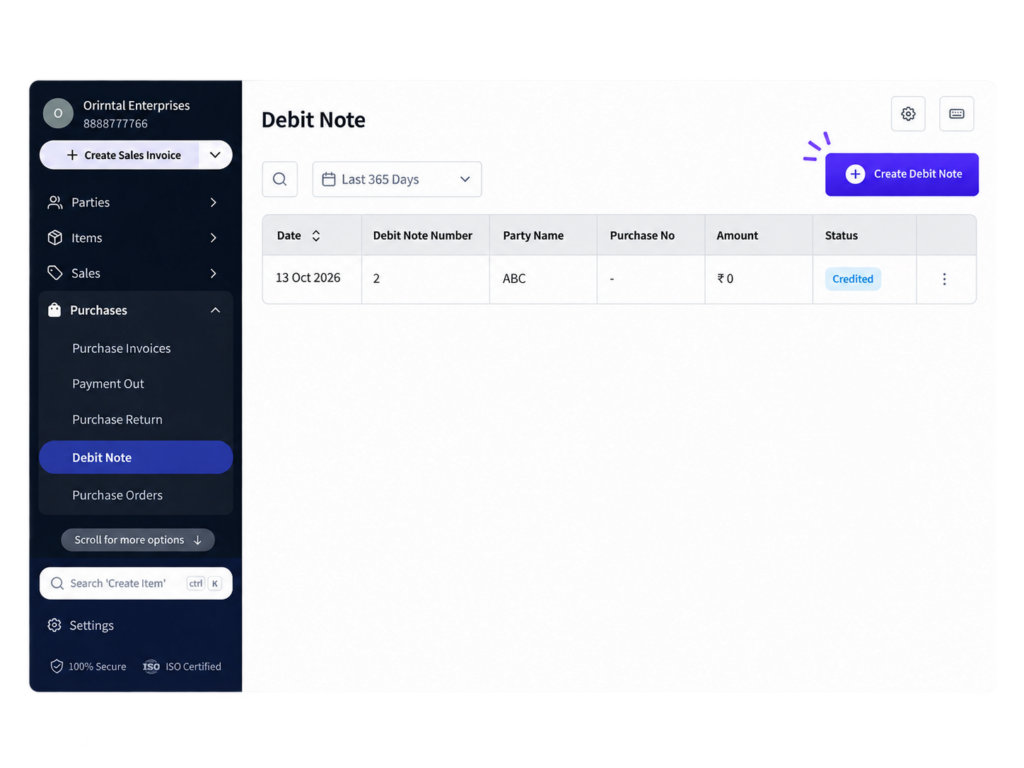
Debit Note Feature in myBillBook
The Debit Note feature in myBillBook helps you record supplier-side adjustments against an earlier purchase. You can create a debit note from the dedicated Purchases → Debit Note section, link it to the relevant purchase invoice and keep the adjustment connected to the original transaction.
You can also start from a supplier or purchase-invoice context when you are already reviewing the transaction. Both entry points lead to the same debit-note workflow.
How to Create a Debit Note in myBillBook
Step 1: Open Purchases → Debit Note
Go to the Debit Note section under Purchases. This is the main place to view existing debit notes and create a new one.
Step 2: Create a New Debit Note
Start a new debit note and select the supplier or party for the adjustment.
Step 3: Link the Relevant Purchase Invoice
Use the invoice-linking option to select the purchase invoice that the debit note relates to.
Step 4: Review the Invoice and Item Details
myBillBook brings the relevant invoice information into the debit note workflow so you can work from the original transaction instead of entering everything again.
Step 5: Enter the Required Adjustment
Update the affected item, quantity or value according to the supplier-side adjustment you need to record.
Step 6: Review and Save
Check the supplier, linked invoice and adjustment details, then save the debit note.
You Can Also Start from the Supplier or Invoice
If you are already reviewing a supplier or purchase invoice, you can start the debit-note action from that transaction context instead of first opening the Debit Note list.
The important part is the same: the debit note should be linked to the correct purchase invoice so the adjustment remains connected to the original transaction.
What the Debit Note Feature Helps You Do
Link Adjustments to Purchase Invoices
Keep the debit note tied to the supplier transaction it belongs to.
Reduce Repeated Data Entry
Work from the linked purchase invoice rather than recreating the complete transaction manually.
Manage Debit Notes from One Place
Use the dedicated Debit Note section under Purchases to view and create supplier-side adjustments.
Record Partial Adjustments
Adjust only the affected items, quantities or values when the complete purchase does not need to be changed.
When to Use the Debit Note Feature
A Purchase Needs an Upward Adjustment
Use a debit note when the amount connected to an earlier purchase needs to be increased or corrected.
Additional Charges Need to Be Recorded
Create a debit note when an extra supplier-side charge needs to be connected to the original purchase transaction.
Only Part of the Purchase Needs Adjustment
Record only the affected item, quantity or value when the complete purchase does not need to be changed.
You Need a Separate Adjustment Record
Use a debit note instead of changing the original transaction when you need a distinct record of the adjustment.
What to Check Before Saving a Debit Note
Correct Supplier
Confirm that the selected supplier or party matches the original purchase transaction.
Correct Purchase Invoice
Link the debit note to the relevant purchase invoice so the adjustment remains traceable.
Correct Item, Quantity or Value
Review the specific part of the purchase being adjusted before saving the debit note.
Final Adjustment Amount
Check that the debit note reflects the actual supplier-side adjustment you intend to record.
Important Things to Know About Debit Notes
Debit Note Is a Purchase-Side Adjustment
In myBillBook, Debit Note is available under Purchases and is used for supplier-side adjustments. Credit Note is handled separately under Sales.
Link the Correct Original Transaction
Invoice linking is important because the debit note should remain associated with the purchase being adjusted.
Partial Adjustment Does Not Require a Full Purchase Change
If only part of the transaction is affected, update the relevant item, quantity or value instead of changing the entire purchase.
Tax Treatment Depends on the Transaction
Where GST applies, the adjustment should follow the relevant original transaction and current GST requirements.
Debit Note Feature vs Debit Note Format
This page is specifically about the Debit Note feature inside myBillBook — where it is available, how to create a debit note, how invoice linking works and how supplier-side adjustments are managed.
If you are looking for downloadable Word, Excel or PDF templates, GST fields, examples or debit-note document structure, visit the Debit Note Format page.
Who Can Use the Debit Note Feature?
Retailers
Record supplier-side adjustments against purchase invoices without changing the original purchase record.
Wholesalers & Distributors
Manage purchase corrections and additional supplier charges against existing purchase invoices.
Manufacturers
Keep supplier purchase adjustments linked to the transaction they relate to.
GST-Registered Businesses
Maintain separate purchase adjustment records while keeping the relevant original transaction connected.
Frequently Asked Questions
Can I create a Debit Note from a supplier or purchase invoice?
Yes. If you are already reviewing the supplier or purchase transaction, you can start the debit-note action from that context and link it to the relevant purchase invoice.
Can I link a Debit Note to a purchase invoice?
Yes. Linking keeps the debit note connected to the purchase transaction it is adjusting and reduces repeated data entry.
Can I record a partial adjustment with a Debit Note?
Yes. If only part of the purchase is affected, update only the relevant item, quantity or value instead of changing the complete transaction.
Is this the same as the Debit Note Format page?
No. This feature page explains how Debit Note works inside myBillBook. The Debit Note Format page focuses on templates, document fields, GST details and examples.